My TEDx Talk

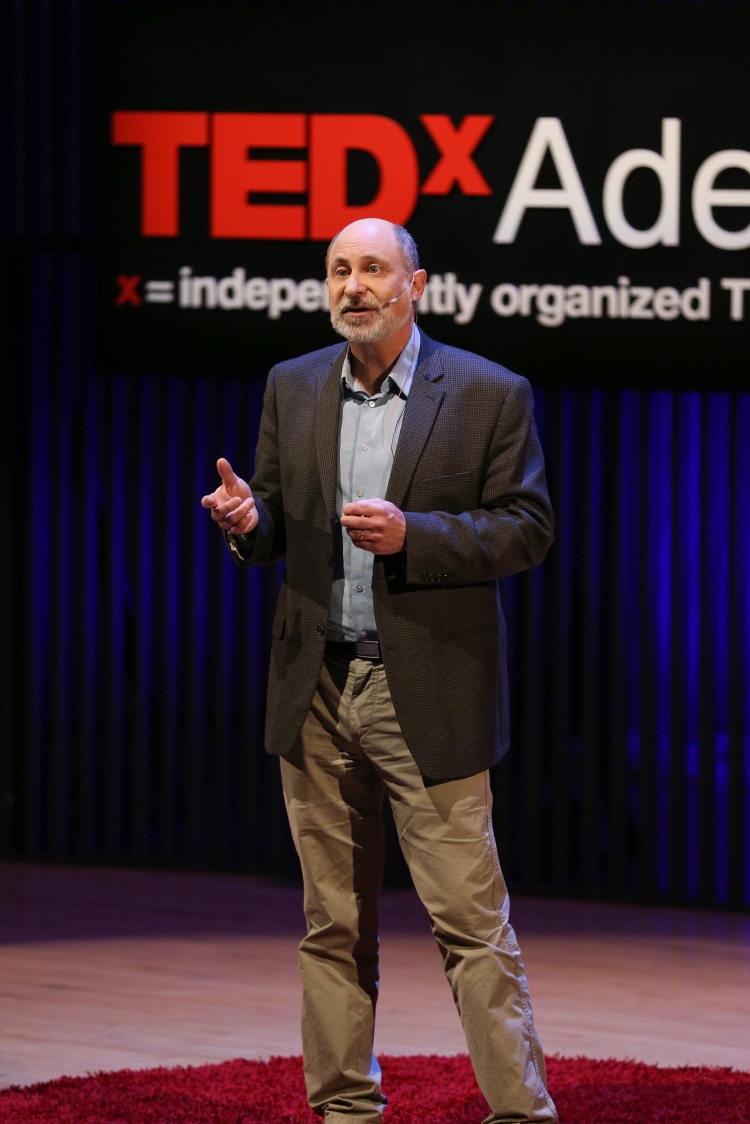
TEDx Adelphi University | AU PAC | April 5th 2016. Copyright Chris Bergmann Photography

“God in the Public Square” has been posted here. This seventeen minute talk examines non-theist God beliefs, a huge part of our culture today that few even acknowledge exists. For non-theists, God is a “What” rather than a “Who”. Non-theists have been central to the conversation in the Public Square since the founding of the United States and are still in the middle of the great debate.

tedx004
TEDx Adelphi University | AU PAC | April 5th 2016. Copyright Chris Bergmann Photography

God for the rest of us #2

When I encounter a politician making a statement that includes God, there is a jolt of discomfort. The worst visceral reaction is when the politician declares with all the passion of an entranced believer, “God bless America!” My wincing is not a matter of patriotism or of affirming my citizenship but a matter of God belief. “God bless America” is a statement explicitly announcing to the audience that God is a self-conscious deity who intervenes in human history and takes action for those God favors. The cringe is the experience of absurdity, of a clash between reality as I understand it and a God belief that I do not accept.

If just the absurdity of a God belief I do not hold and reality as I understand it was the only issue, my complaint would be a minor affair. However, when a politician declares “God bless America!”, my denial of that statement leaves me open to a much graver accusation, an indictment that I am a poor citizen, lacking pride and respect for my country. “God bless America” is not just about God, but about me, and you, and you too.

The logic works like this: because I do not believe in the all-conscious God who intervenes (I call this God “The Parent God”), I may not believe in my country either. In reality patriotism and God belief are not connected, one does not inform the other. However, some promote that God and country go hand-in-hand. For the politician seeking a thunderous applause of affirmation, the accusation is subtle and pernicious – clap or you are a bad citizen.

Hence, the finch of absurdity and the desire to avoid all politicians on the campaign trail.

God for the Rest of Us #1

Many of us are seeking a God we can believe in without discarding all of the amazing knowledge that we use in this unprecedented age of human advancement. Evolution is a fact and the Big Bang Theory is a fact. Computers, quantum physics and genocide are all facts of life. With all of this information and the rush of new ideas and concepts that we rely upon daily, what is a God for the rest of us?

#1 God of the Bible

Torah presents God as the Parent God, intervening in history, granting favor to the obedient, and lending a miracle or two to His children, the Israelites. This God has to present principles by which people can live without resorting to violence and mayhem first. This God sets down laws that are derived from the principles. He rewards good behavior and he punishes bad behavior. Like any parent, God of the Torah loses his patience with His children quite a number of times.

In the middle part of the Hebrew Bible, the prophet Hosea presents the image of God as the husband and Israel as His unfaithful, whoring wife. The prophet preaches that the relationship between God and Israel is not father and child but instead, husband and wife. This is not an equal relationship though because women were still property in significant ways and the husband was the final authority. Song of Songs softens the “authority and property” model with the erotic love poetry of two lovers. Rabbi Akiba, in his argument on why Song of Songs should be in the Bible, suggests we read Song of Songs as God the groom and Israel the bride.

The Book of Esther, in which God makes no appearance, presents the greatest challenge to those who want to believe in God. God is not in the story and He is not even in the wings. Through their own courage and tenacity, Esther and Mordechai save themselves. The Silent God, the God who does not answer, will haunt every person who finds themselves in harm’s way throughout the millennia. They will pray for rescue and salvation, and there will be no divine intervention.

The God who answers this dilemma of silence in the Book of Job offers no comfort. “You know not what I do. Even if you did know, you could never understand,” explains God in the whirlwind in a long piece of poetic prose in the last chapters.

The Bible gives us four major images: God the parent, God the husband, God the Silent and God who cannot be known. Orthodox Christians, Jews, and Muslims embrace God the Parent and at times, God the husband. Atheists point to God the Silent and God who cannot be known and respond, “What’s the point then?”

If you are not Orthodox or Atheist, the search for a God for the rest of us must continue to look elsewhere.

Lesson in Jewish Humor

There once was a powerful Japanese emperor who needed a new chief samurai. So he sent out a declaration throughout the entire known world that he was searching for a chief.

A year passed, and only three people applied for the very demanding position: a Japanese samurai, a Chinese samurai, and a Jewish samurai.

The emperor asked the Japanese samurai to come in and demonstrate why he should be the chief samurai. The Japanese samurai opened a matchbox, and out popped a bumblebee. Whoosh! went his sword. The bumblebee dropped dead, chopped in half. The emperor exclaimed, “That is very impressive! “The emperor then issued the same challenge to the Chinese samurai, to come in and demonstrate why he should be chosen. The Chinese samurai also opened a matchbox and out buzzed a fly. Whoosh, whoosh, whoosh, whoosh! The fly dropped dead, chopped into four small pieces. The emperor exclaimed, “That is very impressive!” Now the emperor turned to the Jewish samurai, and asked him to demonstrate why he should be the chief samurai. The Jewish Samurai opened a matchbox, and out flew a gnat. His flashing sword went Whoosh! But the gnat was still alive and flying around.

The emperor, obviously disappointed, said, “Very ambitious, but why is that gnat not dead?” The Jewish Samurai just smiled and said, “Circumcision is not meant to kill.”

************************************

Point #1 – No other group, including the emperor, was denigrated in order to generate the humor. Historically, Jewish humor has been sensitive to the inferior position of Jews in a given culture and has striven to be uplifting rather than degrading of others. However, Jewish humor is often self-denigrating.

Point #2 – There is a wonderful ambiguity between taking the joke at its plain meaning or as an act of unbridled chutzpah. When in doubt, the holy grail (ahem) of the Jewish comedian is chutzpah. It is true Jewish mothers feed their children chutzpah in their breast milk.

Point #3 – There never was nor is such a thing as Jewish samurai, at least as of today.

On Elder Suicide

A colleague just lost a 72 year old father-in-law to suicide. He wanted to assure us that are the family making a concerted effort to remember the joys and successes of the man’s life and not just his tragic end. Only a short time has passed since Robin Williams took his life while in his sixties. Elder suicide is not a new phenomenon and its tally has been recorded for decades; it is not uncommon. There are many lessons to be learned in these tragic deaths and the first and most important is that not everyone can be saved from their own destructive impulses.

The media frenzy surrounding Robin Williams’ death immediately pointed to his history of depression and perhaps other mental illnesses even though he was under treatment for Parkinson’s disease. The message left for entertainment consumers is that depressed people kill themselves. The media left for fresher tales of woe and then ignored information that was released later. Rarely does the media circle back to examine earlier released articles, meaning that a later review of Mr. Williams death got little play.

Parkinson’s disease is a progressive disorder of the central nervous system of the brain. The disease is incurable and affects brain chemistry. Besides the physical symptoms of stiffness and tremors of limbs that an observer can see, victims of Parkinson’s disease experience organic depression. “Organic” signifies that the depression is not from an external source (i.e. loss of a spouse or a job) but is an issue caused by brain chemistry. Medications for organic depression may not be effective and in this case they were not. Robin Williams committed suicide but he died of Parkinson’s disease.

The case of Robin Williams is not atypical for the disease. No one failed Mr. Williams and Mr. Williams did not fail himself. However, practitioners of certain religious systems condemn Robin Williams and his death, consigning him to their version of after death damnation commonly called “Hell”. What these people believe is not of consequence but the pain they inflict on mourners is consequential. Of course mourners have doubts; they have doubts whether they were attentive enough or aggressive enough. If only they had observed “x” or seen “y” or asked “z”, they bargain that they could have prevented the tragic end. Or they are angry at the deceased for causing them such pain. Hellish condemnation only fuels the pain of profound mourning.

One of the formidable reasons for religion is to guide us through the painful episodes of our lives. When a religious system causes more pain at the point that it supposed to provide solace, the theology is false. Any religion should be able to understand suicide as a disease, as our medical science demonstrates that it is. Suicide in the oldest cohorts of human beings is not wholesale preventable or simple to understand. Even more, these adults are old enough and have enough experience to succeed in their destructive impulse. If anyone can succeed in acting on this urge, our elders certainly will.

Our ever evolving understanding of disease and its courses forces us to reassess our elders’ motives and our judgments of their behaviors. Disease attacks mind, body, and spirit. When the brain is afflicted by a disease, boundaries of behavior may disintegrate. It is the disease not the person and the caregiver is helpless. Condemnations and self-recriminations are common, wrong and only spread the destructive consequences of the disease beyond the afflicted.

My colleague in mourning is correct: celebrate the successes of a life when lived well and invoke the good memories. If one wants to pray for these souls who have been released from the burden of their tangled minds, then pray for cures that allow mortals to go gently into that long, dark night.